The journey of a father and son who search for the meaning of manhood with fast food and every Clint Eastwood movie ever made. Even the really shitty ones.
Title: Casper Released: 1995 Genre: Semi-animated fantasy with alleged comedy Notable for: A cameo appearance by Clint Coolest thing Clint does: Vows to kill bridge players.
Setting out to watch every Clint Eastwood movie is strange enough, but only someone deranged would include “Casper” on the list.
Guilty, your honor!
Here's our deranged logic: We insisted on seeing Clint’s earliest movies, so we should see "Casper," too. Clint was a glorified extra in some of those early films, so he has bigger on-screen presence with a cameo appearance in "Casper."
We won’t bother to describe what happens in “Casper” except to say it's about the friendly ghost of cartoon fame. Click here if you itch to see the trailer.
Clint shows up briefly as a reflection in a bathroom mirror.
“I'm going to kill you, your momma and all her bridge-playing friends,” the reflection of Clint says. Believe it or not, that was a highlight of nearly two hours of viewing time.
We're not sure why Clint agreed to appear in a movie like this, even for a few seconds. But perhaps it is worth noting that two years earlier the little boy in Clint's "A Perfect World" was dressed in a Casper costume for much of the film. Maybe Clint likes friendly ghosts.
Next up: "Absolute Power." Back to real Clint movies.
Title: The Bridges of Madison County Released: 1995 Genre: Romance Notable for: Being a chick flick Coolest thing Clint does: Umm ... Huh, nothing pops to mind.
Jeering began before the first line of dialog. "Grow a pair, Clint!" we yelled. "Make something explode!"
This was the day dreaded most since early formative stages of The Clint Eastwood Project. It was the day to watch "The Bridges of Madison County."
As almost everyone knows, "The Bridges of Madison County" is Clint's only movie aimed at a female audience.
Nothing is blown up. No one is shot with a harpoon gun. No one chases anyone on foot or in a car, a helicopter, a motorcycle, or a jet fighter plane. There is no suspense in the story and no stunt work in the film.
It is a movie about relationships. Specifically, Clint's four-day, deeply loving romantic relationship with Meryl Streep, who unleashes yet another accent.
The story is easy to summarize because almost nothing happens. Clint plays a roving photographer in 1965 who falls in love with an Iowa housewife played by Streep. Inevitably, they must part after four magical days of slow dances, sensitive smiles and bathtub sex. The story is told as a flashback from decades later, when Streep's adult children discover the affair after her death.
The excitement builds as we watch Clint appreciate good light, peel carrots, be polite, and pick flowers.
"I think I need everyone," Clint says. "I love people. I'd like to meet them all."
Good God, Clint.
Andrew has reached a milestone in The Clint Eastwood Project because "The Bridges of Madison County" was the first Clint Eastwood movie released after his birth.
He gives the film a low score on the Clint-O-Meter, but contends it is not bad for what it tried to be. Brad says it did not try to be a movie he wants to watch. To him, the best parts came when the stars, Clint and Meryl, were off screen.
We're not sure why Clint decided to do this, but we thank him for doing it only once. We need male icons to be iconic.
Next up: "Casper." That's right, "Casper." This shows how absurd we've become about seeing this job through completely.
Title: A Perfect World Released: 1993 Genre: Escaped convict buddy movie Notable for: Creating the illusion Clint is paired with Kevin Costner Coolest thing Clint does: Sucker punches a fellow cop for being trigger happy
The most fundamental thing expected from any movie starring Clint Eastwood is this: It should star Clint Eastwood. "A Perfect World" fails that test.
Clint has second billing behind Kevin Costner, which is false advertising. He plays a relatively small supporting part and never appears in a scene with Costner until more than two hours into the movie. If Hollywood was fair, Clint would have third billing behind a little kid and probably fourth behind Laura Dern.
"A Perfect World" is not a Clint Eastwood movie. It is a Kevin Costner movie directed by Clint.
On the up side, it's a very good story and Costner was never better in any role. Sez us, that's who.
Costner is a hardened criminal who busts out of a Texas prison with a psychotic creep sometime in the mid 1960s. One man is killed during the escape, and the convicts take a shy 8-year-old boy hostage.
Violent, yes, but Costner is not exactly evil. He saves the boy's mother from rape and kills his psycho partner for attacking the kid.
The hostage and Costner bond in a father-figure way.
"Are you going to shoot me?" the kids asks. Costner answers, "No, hell no. You and me are friends."
The boy chooses to stay with Costner when he could be released, and he breaks out of his introverted shell a little. In one odd touch probably dripping with symbolism or overtones of duality or something else equally beyond us, the kid steals a Halloween costume and is dressed for most of the movie as Casper the Friendly Ghost.
Clint is a Texas Ranger in charge of the manhunt. Dirty Harry he is not. He pursues Costner while swigging Geritol and riding in an Airstream trailer taken from the governor's campaign organization.
When he is on camera, Clint says things like, "We'll check every road and every farm between San Angelo and Sweetwater." He decides to eat the governor's T-bone steaks and Tater Tots, declaring, "I do like Tater Tots."
The co-star in Clint's scenes is Laura Dern, who plays a hot-shot criminologist assigned to the manhunt. That's highly unrealistic for a young female in Texas circa 1965, but we're willing to roll with it. Dern first dismisses Clint as "a hillbilly Sherlock Holmes" but eventually warms to him in a professional way.
Dern provides detailed background on Costner's difficult childhood and early run-ins with the law. This leads to the revelation that as a young lawman Clint encountered Costner and took a hard line that perhaps sent him deeper into life of crime.
The inevitable confrontation comes when Costner is already injured after being gut-shot by the boy in a very intense scene we did not see coming. Clint talks Costner into giving himself up, but then a cop sniper shoots Costner dead in violation of Clint's order to hold his fire.
Two hours and 19 minutes into the film, Clint finally gets furious. He punches the sniper cop square in the nose, then Dern kicks him in the nuts.
Fresh off his best-director Oscar for "Unforgiven," the movie probably reflects the start of Clint's preference to concentrate on directing more than acting. In that way, it's the dawn of a new era in Clinthood.
Well, it had to happen sometime. We cannot expect a man old enough to drink Geritol to do all the heaving lifting.
Title: In the Line of Fire Released: 1993 Genre: Presidential assassin suspense Notable for: John Malkovich is one great villain Coolest thing Clint does: Takes a bullet for the president
Full disclosure: We always thought "In the Line of Fire" was one of the most under-rated Eastwood movies, and not solely because of Clint.
John Malkovich deserves half the credit for playing an outstanding twisted-genius, psycho-bastard villain engaged in a psychological battle with Clint.
Malkovich is either the best villain ever to tangle with Clint, or he's in second place behind that crazy sumbich Scorpio in the first "Dirty Harry." Tough call, but either way he's damn good.
Of course, Clint pulls his weight, too.
Rather unrealistically for 1993, Clint plays a Secret Service agent who was on duty for the Kennedy assassination. For 30 years he has questioned himself for failing to take the fatal bullet.
Much was made of Clint's "vulnerability" in this film. Mostly this means he played an old guy who runs out of breath jogging alongside the presidential limo. Hell, Clint was 63 when he made the movie. It does not strike us as a bold move to play a guy who was growing old at age 63.
More surprising, Clint is a fairly normal, mostly nice guy. He smiles, plays piano for fun and seduces a much younger woman (Rene Russo). He doesn't hate his job and his superiors don't hate him, although he has friction with a presidential chief of staff played by a future presidential candidate in real life.
Older and nicer, sure, but Clint is still hell on bad guys.
Malkovich is one sick but deeply laid-back dude. He is a former CIA assassin who has, as they say, gone rogue. He breaks the necks of women and shoots dumb rednecks who cross his path.
His plot to kill the president is ingenious in every way except its stupid lack of secrecy. Malkovich frequently calls Clint on the phone to tease him along in a cat-and-mouse game.
Their banter generally involves Malkovich describing a psychological kinship with Clint (which is not correct at all) and pointing out ironies of their situation. Clint usually responds in a less sophisticated way.
"You've got a rendezvous with my ass, motherfucker," Clint says. Well, it played better as an onscreen comeback than it reads in print.
One of their scenes ranks among the most memorable in the annals of Clintdom.
After a rooftop foot chase, Clint finds himself dangling for dear life from the top of a tall building. Malkovich reaches down from the roof to save Clint. Clint pulls his pistol and sticks it in Malkovich's face.
If Clint pulls the trigger, both will die. If he lets Malkovich go, they both live. As this dilemma plays out, that freak Malkovich takes Clint's gun-barrel into his mouth and deep throats it. Weird, intense and weirdly intense.
Malkovich has all the advantages, including superior intelligence, but Clint is tenacious. He unravels the plot and, of course, saves the president and takes down the would-be assassin.
Right at the end, Clint goes to his dumpy house with his new squeeze Russo. There they discover another phone message left by Malkovich before his death. As he yammers away on tape, Clint and his girl walk out, no longer interested in the psycho.
Game over, Clint wins. Tenacity and a charming smile make up for a lot of disadvantages.
Title: Unforgiven Released: 1992 Genre: Western with guilt pangs Notable for: Best picture Oscar Coolest thing Clint does: Shoots Gene Hackman dead on a barroom floor
After one full year and 47 movies, we have watched Clint Eastwood drop agent orange on a giant spider, shoot everyone in sight, sing to trees and share a beer with an ape.
We've paid our dues to reach the official start of Clint's Glory Years.
"Unforgiven" is the movie that made it impossible for snooty people to continue regarding Clint as a cinematic joke. It won the best picture Oscar for 1992, and Clint won best director and was nominated for best actor.
Snooty we are not. Like a surprising number of Clint's fans, we're not even convinced "Unforgiven" is his best western.
"The Outlaw Josey Wales" is impossible to beat. Andrew is also highly fond of Clint's spaghetti westerns and Brad remains overly awed by "High Plains Drifter."
On the other hand, "Unforgiven" beats the crap out of nearly all other best-picture winners. Clint plays a reformed mad-dog killer who reunites with an old partner and a punk kid for one last round of assassination. They ride into a dusty town to kill two cowboys for reward money.
Both cowboys end up deader 'n hell, but the real conflict comes between Clint and the town sheriff, a sadistic law-and-order type who wants no assassins in his town.
Like many of Clint's westerns, it is difficult to tell good guys from bad. The paid killers have good points and the sheriff, played by Gene Hackman, is a vicious thug.
None of that sounds unique for Clint's sort of movie, but "Unforgiven" has two things his earlier westerns lacked.
First, Clint assembled some incredibly distinguished actors. Three actors nominated for best-actor Oscars in the previous four years were cast in supporting roles to Clint, the old grunt-and-stare master. Those three were Hackman, Morgan Freeeman and Richard Harris, although Harris was never in the same scene with Clint.
Just by attracting and paying those guys, it was obvious Clint wanted "Unforgiven" to be taken as a very serious movie. Hackman would win a supporting-actor Oscar.
Second, and undoubtedly more important to voters of the academy, this is not merely another violent western. For the first time in 47 movies, Clint is full of guilt and remorse for his homicidal violence, which allowed "Unforgiven" to be called anti-violent.
Clint and his gang of killers are haunted by their deadly acts. As a nice aside, one character is a dime-novel writer who glorifies western gunfighters while all around him killing is shown an ugly thing without glory. The best example comes when one cowboy is ambushed in an outhouse and shot three times while taking a shit.
The climactic scene comes as Clint puts a finishing bullet into Hackman while the lawman is wounded and bleeding on a barroom floor.
"I don't deserve this," Hackman says. "To die like this. I was building a house."
"Deserve's got nothing to do with it," Clint says.
"I'll see you in hell, William Munny," Hackman says.
"Yeah," Clint says in that whispery voice. Then he pulls the trigger.
Come to think of it, maybe "Unforgiven" is Clint's best western.
Title: The Rookie Released: 1990 Genre: Cop buddy story Notable for: Clint plays second-fiddle to Charlie Sheen Coolest thing Clint does: Executes a leering super-villain who expects Clint to take him in alive
If "The Rookie" accomplishes nothing else, it raises a question we never expected Clint to encounter.
Can a male be raped by a female?
Clint throws it in our faces by participating in a sex scene everyone at the studio must have urged him to cut on the grounds of being weird, disturbing and pointless to what little plot exists in "The Rookie."
A psycho-bitch villain played by Sonia Braga mounts Clint while he is kidnapped and tied to a chair. She cuts him a little with a razor blade, then threatens to slice his cock off. Then she squats on his lap and takes deep pleasure.
"That wasn't sex," Brad said. "It's rape."
"Do you think Clint is going to run to a rape counselor and cry about it?" Andrew asked. "He liked it. He had to like it or she wouldn't be able to do it."
Andrew's point is so biologically obvious the script had to address the issue of Clint's boner. In the midst of her beastly pleasure, the villain psycho-bitch orders Clint, "Don't lose it!"
Our verdict: Clint was not raped. There are probably guys who would pay for what he got.
Why Clint chose to include that scene is a mystery, but he probably wanted something memorable in a movie loaded with flaws.
"The Rookie" may qualify as Clint's final pure action movie, and it comes off as a comic-book story of constant explosions, crashes, fires and gunfights.
Stunt work is good, but inexplicable casting and production decisions suggest Clint was either asleep at the wheel or he wanted to make the story silly.
Clint plays a cop on the auto-theft squad who chases a chop-shop kingpin. That sounds like gritty and unglamorous police work, except the chop-shop kingpin is a James Bond styled villain complete with a high-tech evil lair, getaway planes, remote-controlled bombs and homicidal madness.
It gets stupider.
The chop-shop gang is a bunch of Mexicans and the kingpin boss is played by Puerto Rican actor Raul Julia. His girlfriend/henchwoman is Braga, who is Brazilian. Yet for some unguessable reason, Julia and Braga are supposed to be German.
On top of all that, performances by some actors who played higher-ups on the police force were so laugh-out-loud bad we wondered if Clint asked for a campy feel.
As the title suggests, aside from catching the bad guys, the story is about Clint's rookie partner, played by Charlie Sheen. Sheen is a scared rich boy confronting a deep inner struggle to grow a pair. No surprise here: He does.
Despite so many glaring weaknesses, we confess "The Rookie" never lost our interest simply because so many things blow up, crash, and burst into flame. Not to mention flying bullets.
One test of any mindless action movie is whether viewers care enough by the end to enjoy seeing the evil villains die. "The Rookie" passed that test.
"There's got to be 100 reasons why I don't blow you away," Clint says to Julia just before he blows him away. "Right now I can't think of one."
That's classic Clint, and classic Clint is never all bad.
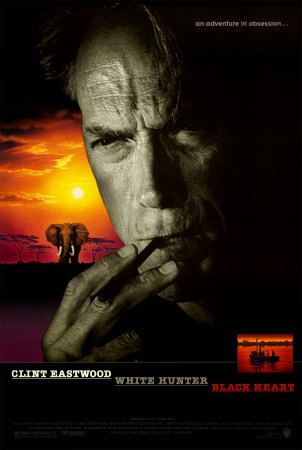
Title: White Hunter, Black Heart Released: 1990 Genre: Hollywood bio-fiction Notable for: Clint talks funny Coolest thing Clint does: Verbally demolishes a smug, Nazi sympathizing Englishwoman over champagne
By this stage of Clint's film output, he obviously itched to try different things. We don't know why he chose "White Hunter, Black Heart" to be one of those things, but it is different.
For starters, Clint must talk more in this movie than in all his westerns combined. And he talks funny.
He plays an egotistical movie director in a transparently veiled story of John Huston making the 1951 film "The African Queen" in the Congo. Other actors play imitations of Katharine Hepburn and Humphrey Bogart, and Clint joins in by imitating Huston's speaking style. He doesn't do a bad job, but it is impossible to stop noticing the dude talks funny.
Studio publicity for "White Hunter, Black Heart" called the movie an "adventure in obsession." It's the sort of script that probably sounded interesting to Hollywood insiders in the same way playing record albums backward fascinates Beatlemaniacs.
The film rises and falls on Clint's portrayal of the flamboyant movie director. His character is selfish, hard-drinking, a womanizer and a lover of manly adventure in the mold of Ernest Hemingway.
"There's nothing tougher than remembering why you chased a dame after you've had her," Clint says at one point. After he is pummeled in a fistfight, he says, "You've got to fight when you think it's right, even if you get the hell beat out of you."
Clint's character annoys everyone, but he has an endearing way of sticking up for little guys.
When a white hotel manager knocks down a black African employee for a minor mistake, Clint calls the white guy a yellow bastard and fights him.
Our vote for the best scene in the movie comes when Clint's dinner companion, a lady he hopes to lay, reveals she hates Jews. He verbally rips her to shreds. Click here to see it.
Elephant-hunting is a central theme because Clint is obsessed with shooting a "big tusker" while in Africa. Much symbolism probably exists here, but we are too dumb to explain it.
"It's not a crime to kill an elephant," Clint explains. "It's a sin. It's the only sin you can buy a license to go out and commit."
Killing an elephant sounds adventurous but it is a poor foundation for a plot. The story never builds to any climax except the less-than-riveting uncertainty of whether Clint will bag his big tusker.
When the moment of truth arrives, Clint -- unbelievably -- wimps out. He cannot pull the trigger and a charging elephant kills his beloved hunting guide. A shaken Clint goes back to his movie set and commences filming "The African Queen."
The elephant-sparing ending must either reveal Clint's manly macho was a fraud or it involves some inner awakening. We did not care enough to ponder.
Lifelong Clint fans are unlikely to place "White Hunter, Black Heart" high on their list of favorites. Among other weaknesses, nothing explodes and Clint's character is not heroic. But critics loved it.
"This material marks a gutsy, fascinating departure for Mr. Eastwood, and makes it clear that his directorial ambitions have by now outstripped his goals as an actor," wrote the New York Times reviewer.
Different must be good for its own sake in Clint's line of work. Oscars were just two years away for the old grunter.
Brad Flory is a middle-aged man and Andrew Flory is his 16-year-old son. They argue about many things, but on this truth they agree: Clint Eastwood is a real man. Together they will explore every facet of Eastwoodism by watching all 60 movies, in chronological order, with an acting appearance by The Great Grunter. The eternal male wisdom found in these films, including examples of excellent spitting, will be shared here, movie by movie.